
Watching Four Video Art Works from Yamashiro Chikako at Rikkyo University
Field Notes and Reflections on the event 'Continuing the story of Okinawa: Images of violence and salvation in the video works of Chikako Yamashiro'

日本語のAI翻訳は下にあります。Tradução feita por IA abaixo.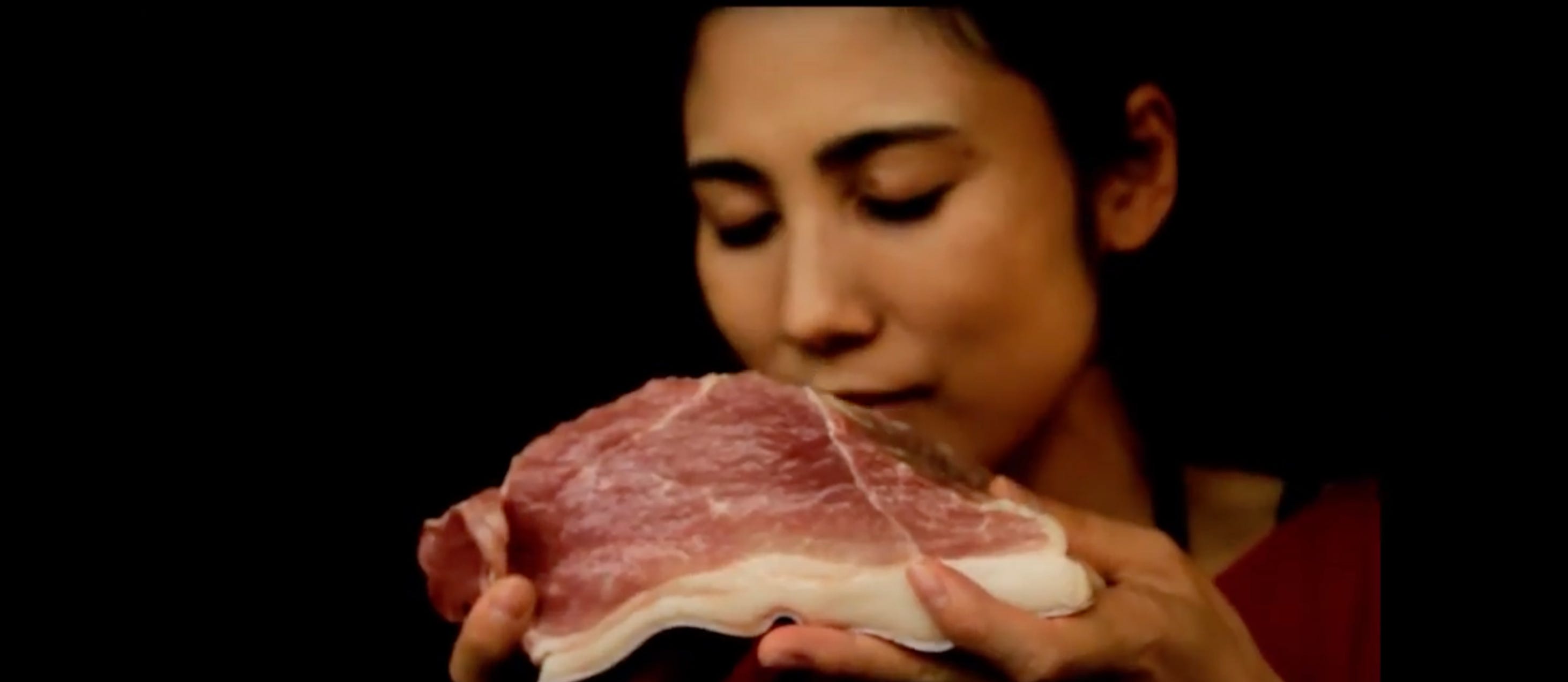
Image: Youtube: 「肉屋の女」MAMプロジェクト018:山城知佳子」トレイラー映像
Chikako Yamashiro is a visual artist from Okinawa. She creates video art with themes related to the reality of Okinawa. In the event ‘沖縄をかたり継ぐこと——山城知佳子の映像作品における暴力と救済の形象: (Continuing the story of Okinawa: Images of violence and salvation in the video works of Chikako Yamashiro)’ organized by the American Institute (アメリカ研究所) at Rikkyo University, we had the chance to watch four movies from her:
肉屋の女 A Woman of the Butcher Shop, 2016(27:30)
土の人 Mud Man(Single channel version), 2017(26:00)
チンビン・ウェスタンー家族の表象ーChinbin Western: Representation of the Family, 2019(32:00)
リ フレーミング Reframing (2021)
All the videos show images of Okinawa. Departing from Encoding and Decoding, as defined by Stuart Hall, first I think I should reflect on what I saw, and how I took those images. Then based on the comments and answers Yamashiro gave to the audience, I think I should try to review my own thoughts and try to grasp different levels related to the subjectivity of the artist.
In ‘A Woman of the Butcher Shop’, I saw “poverty” in the scenery, I could relate that to Brazil, and scenes and spaces I could find there. Areas where old and precarious constructions seemed like they had been there idle in the areas taken by the grass. The sunny, warm colors and lights, the men working. Women are there serving flesh, being flesh. The meat comes from the sea, as people came from the seas and spread around the thousands of islands that form Earth. Land, for me, is a central piece of all the works.
I recalled the fact that Japan, in its military endeavors in the past, tried to increase the amount of meat men should consume and how that was then linked to the idea of masculinity.
All the women had the same clothes. They were all the same women; they were all the women. They are eaten by the men; they are eaten by the land when they enter the cave.
For Yamashiro, the cave is a symbol of the imagery being swallowed. She doesn’t describe her piece as being about women. She answered a question on that, saying that it was about people, about women, but also men. The meat appeared in her mind. It was coming from the sea. She started from there, and everything appeared after that.
Mud Man is straightforward about the land. It mixes Okinawa with Korea, an area that was close to the Ryūkyūs in the past, an area that was also colonized and exploited by Japan in the past. Yamashiro mentions how both places have similarities in terms of how their languages were threatened and how subtitles for Korean were not necessary. I think that that’s interesting. Giving subtitles to a dominant language and letting them understand is abiding by colonialism. When she leaves it without translation, and people need to accept it, I find that the work speaks for itself. It made me remember Gloria Anzaldúa when she uses Spanish words in her work and is clear about how she will leave it as it is and without translation.
The war scenes, the music, the beat music, and the modern editing, for me, show an Okinawa that had its land used as a stage. Like a stage for a party, a play, a stage for war, it’s a stage for politics and more.
‘Chinbin Western’ is the most straightforward piece. It has humor, it shows the issues with the construction of the military bases, and also the relation of people who protest against it, but also the people who although being local, need to work in those constructions, possibly for the lack of other job opportunities. The father in the work represents it. He hides his face with a sunglass when he passes the protest against the construction of the Henoko Military Base. He works at the company extracting land to build the base. And this is something that Yamashiro reflected in one of the answers. The family who seems happy represents this conflict. When Morika Yoshiyama appears as a vision to the mother, who somehow hunts her, she drives to the family sanctuary in the cemetery. This reflects the relationship between Okinawans and their ancestors, those who came from the sea in the legend, those that Morika mentions, and those who appear staging when the father shows the mountain that is being scraped to the children. There are traditional dances, legends, and languages. Something that was part of Yamashiro’s early works. She mentioned that making videos of traditional dances and music was a way to preserve that culture and prevent it from being lost.
It was also interesting how Yamashiro had Morika in the film. She is a person who was featured in Studio Voice magazine in an article about hajichi tattoos. Morika has many tattoos and a piercing. She is an artist in the film, drawing many things, and also works at the bar that the father goes to after work. Thinking about hajichi specifically, I wonder if that was one of the reasons Yamashiro decided to have Morika in the film. She also is the one that brings the premonition to the mother, and according to the cultural significance of hajichi, one of its meanings is the connection with the ancestors and the spiritual world. But also, I see Morika as a rebel force. With Moeko-san we talk a lot about how having hajichi is heavy in Japan because of taboo. Many Uchinānchu women in Japan usually express how they would like to have hajichi, but they are concerned about not being able to enter hot baths or even finding a job. In this sense, for Morika, deciding to have a hajichi is probably closer to what the transnational Uchinānchu community in Brazil might experience. Of course, hajichi has a big meaning to them, but when it comes to the pressure they might feel from society, their experiences are different from what women in Okinawa/Japan will experience.
The last movie, Reframing, which was an installation, explored land issues, military bases, and protests. The dance performance and the fighters represent those living around that space and needing to deal with it. They are the opposite of those who are far away and cannot see, hence having difficulty articulating.
That difference between those who are there and those who are not makes me think about the discussion about the title of the event. 沖縄をかたり継ぐこと——山城知佳子の映像作品における暴力と救済の形象」("Continuing the story of Okinawa: Images of violence and salvation in the video works of Chikako Yamashiro”). Yamashiro expressed how she was not happy with the title. She said that “the title maybe should be Japan and not Okinawa.” In the beginning, that made me think that maybe she was not in agreement with the idea of bringing up the issues or reality of Okinawa, but I think I was wrong because her work is about that. For me maybe her point was about, this is not about Okinawa, this is a Japan issue, japan forced Okinawa to become Japan, so the issue of Okinawa is the issue of Japan, both are united by the Imagined nation of Japan and the nationality. What oppresses Okinawa is related to politics, and politics are connected to the concept of a nation. But that makes me think about the importance to reframe my work on Japan, as I have thought before. I also remembered the talk with people in Naha, where they commenting on what I should do my research on, they told me that an important thing would be to reflect on how Okinawa is been seen and researched. But the focus is not Okinawa, but the researchers, academia, Japan, and the global north. I think this must be the direction of my work. I cannot be in the position of Observing Okinawa or trying to defend it or push for decolonization, but I must look at how the hegemonic forces colonize it and how they read, observe, exploit, and depict Okinawa.
Another important memo from this event was a reflection that I had on participating in such events as part of my fieldwork. I wanted to ask questions, but I need to understand that I should refrain from them if I want to observe the interactions to gather insights to build my work. That’s a question to which I don’t have the answer yet. Should I engage, or should I just observe? Or that really depends. Depends on what type of event, who is joining, and what I have to ask or say (maybe).
日本語翻訳(AI)山城知佳子は沖縄出身の映像作家であり、沖縄の現実に関連するテーマを扱ったビデオアートを制作している。立教大学のアメリカ研究所が主催したイベントでは、彼女の映画4作品を鑑賞する機会があった。
肉屋の女 A Woman of the Butcher Shop, 2016(27:30)
土の人 Mud Man(Single channel version), 2017(26:00)
チンビン・ウェスタンー家族の表象ーChinbin Western: Representation of the Family, 2019(32:00)
リ フレーミング Reframing (2021)
すべての映像は沖縄の映像を映し出している。スチュアート・ホールが定義した「エンコーディング/デコーディング」から出発し、まず私自身が何を見たのか、そしてそれをどのように受け取ったのかを考察するべきだと思う。その後、山城が観客に向けて語ったコメントや回答を踏まえ、自分の考えを再検討し、アーティストの主観性に関わる異なるレベルを理解する試みをするべきだと思う。
『肉屋の女』では、私は風景の中に「貧困」を見た。それはブラジルの風景やそこにある空間と重なる部分があった。古くて脆弱な建物が、草に覆われながら放置されているように見えた。太陽の光、暖かい色彩、働く男たち。女性たちはそこにいて肉を提供し、そして肉そのものでもある。肉は海から来る。人々が海からやってきて、無数の島々に広がったように。土地は、私にとってすべての作品に共通する中心的な要素である。
また、日本が過去の軍事的な取り組みの中で、兵士の肉の消費量を増やそうとした歴史と、それが男性性の観念と結びついていたことを思い出した。
すべての女性が同じ服を着ていた。彼女たちはすべて同じ女性であり、すべての女性であった。彼女たちは男たちに食べられ、洞窟に入ると土地に食べられる。
山城にとって、洞窟はイメージが呑み込まれる象徴である。彼女は自身の作品を「女性についての作品」とは語らない。その問いに対して、彼女は「人々についての作品だ」と答えていた。それは女性についてでもあり、男性についてでもある。彼女の中にまず「肉」が現れ、それが海から来るものであると認識したことからすべてが始まり、その後に様々な要素が生まれた。
『泥人』は土地について直接的に語る作品だ。沖縄と韓国を混ぜ合わせている。過去に琉球と近しい関係にあった地域であり、日本によって植民地化され、搾取された地域でもある。山城は、両者が言語の脅威にさらされた点で共通点を持つことを指摘し、韓国語の字幕が必要だったことについて語った。それは興味深いことだ。支配的な言語に字幕をつけ、その言語を理解させることは、植民地主義に従う行為である。翻訳をせず、観る者がそのまま受け入れざるを得ない状態にすることで、作品が語るものがある。それは、グロリア・アンザルドゥーアの著作において彼女がスペイン語をそのまま残し、翻訳しないまま提示することと重なる。
戦争のシーン、音楽、ビートの効いた楽曲、そして現代的な編集技法。これらは、私にとって「舞台として使われた土地としての沖縄」を表している。それは、パーティーの舞台、演劇の舞台、戦争の舞台、政治の舞台など、多様な形で利用されてきた土地である。
『チンビン・ウェスタン』は最も分かりやすい作品である。ユーモアを交えながら、軍事基地建設の問題、反対運動をする人々と、その一方で地元に住みながら基地建設に関わる仕事に就かざるを得ない人々の関係を描いている。作中の父親がそれを象徴している。彼は辺野古基地建設の反対運動の前を通る際にサングラスで顔を隠す。彼は基地を建設するための土砂を採取する企業で働いている。そして、これは山城が観客の質問に答える中で語った内容とも重なる。「幸せそうな家族」が抱える葛藤を示しているのだ。
また、作中で森花(Morika)吉山が母親の前に現れるシーンは、沖縄の人々とその祖先の関係を象徴している。伝統的な踊り、伝説、言語が、父親が子供たちに山が削られていく様子を見せる場面と共鳴する。山城は、初期の作品で伝統舞踊や音楽の映像を記録することによって、沖縄文化を保存しようとしたと語っていた。
森花は、スタジオ・ボイス誌にハジチの特集記事で登場した人物である。彼女は多くのタトゥーを持ち、ピアスをしている。作中ではアーティストとして描かれ、バーで働くシーンもある。ハジチの文化的意味を考えたとき、山城が彼女を登場させたのは意図的なものではないかと思う。ハジチは祖先や霊的な世界とのつながりを象徴するが、同時に彼女自身が「反逆の力」としての存在でもある。私とモエコさんが話したように、日本ではハジチを持つことは依然としてタブー視される。日本に住む多くのウチナーンチュ女性たちがハジチを入れたいと考える一方で、公衆浴場に入れなくなることや、就職の問題を懸念する。その意味で、森花がハジチを持つことは、ブラジルのウチナーンチュ移民コミュニティが抱える問題に近いのかもしれない。
最後の作品『リフレーミング』は、軍事基地と土地問題、そして抗議活動をインスタレーションとして描いた作品であった。ダンスパフォーマンスや戦う人々は、その土地に生き、向き合わざるを得ない人々を象徴する。一方で、遠く離れ、問題を直視しない人々との対比が示されている。
この「見る者と見ない者」の対比は、本イベントのタイトルに関する議論とも重なる。「沖縄をかたり継ぐこと——山城知佳子の映像作品における暴力と救済の形象」。山城はこのタイトルに不満を示し、「タイトルは沖縄ではなく、日本にするべきではないか」と語った。初めは彼女が沖縄の問題を語ることに抵抗があるのかと考えたが、そうではなかった。彼女の作品は沖縄を語っている。しかし、それは沖縄の問題ではなく、日本の問題なのだ。沖縄を日本にしたのは日本であり、沖縄の問題は日本の問題でもある。日本という「想像された国民国家」によって統合された構造そのものが、沖縄を抑圧している。
私自身の研究も、日本に焦点を当てるべきなのかもしれない。沖縄を観察するのではなく、沖縄をどのように読み、観察し、搾取し、描写するのかを研究するべきなのではないかと考えるようになった。
Português (IA)Chikako Yamashiro é uma artista visual de Okinawa. Ela cria videoarte com temas relacionados à realidade de Okinawa. No evento organizado pelo Instituto Americano (アメリカ研究所) na Universidade Rikkyo, tivemos a oportunidade de assistir a quatro filmes dela.
肉屋の女 A Woman of the Butcher Shop, 2016(27:30)
土の人 Mud Man(Single channel version), 2017(26:00)
チンビン・ウェスタンー家族の表象ーChinbin Western: Representation of the Family, 2019(32:00)
リ フレーミング Reframing (2021)
Todos os vídeos mostram imagens de Okinawa. Partindo da teoria de Codificação e Decodificação, conforme definida por Stuart Hall, primeiro penso que devo refletir sobre o que vi e como interpretei essas imagens. Depois, com base nos comentários e respostas que Yamashiro deu ao público, acho que devo tentar revisar meus próprios pensamentos e buscar compreender diferentes níveis relacionados à subjetividade da artista.
Em A Woman of the Butcher Shop, vi a "pobreza" no cenário e consegui relacioná-la ao Brasil, a cenas e espaços que poderia encontrar lá. Áreas onde construções antigas e precárias pareciam estar ali paradas, tomadas pelo mato. As cores quentes e ensolaradas, a luz, os homens trabalhando. As mulheres estão ali servindo carne, sendo carne. A carne vem do mar, assim como as pessoas vieram dos mares e se espalharam pelas milhares de ilhas que formam a Terra. A terra, para mim, é um elemento central em todas as obras.
Lembrei-me do fato de que o Japão, em suas empreitadas militares no passado, tentou aumentar a quantidade de carne que os homens deveriam consumir e de como isso foi então associado à ideia de masculinidade.
Todas as mulheres usavam as mesmas roupas. Elas eram todas a mesma mulher; eram todas as mulheres. Elas são devoradas pelos homens; são devoradas pela terra quando entram na caverna.
Para Yamashiro, a caverna é um símbolo da imagem sendo engolida. Ela não descreve sua obra como sendo sobre mulheres. Ela respondeu a uma pergunta sobre isso dizendo que era sobre pessoas, sobre mulheres, mas também sobre homens. A carne surgiu em sua mente. Ela veio do mar. Foi a partir disso que tudo apareceu.
Mud Man trata diretamente da terra. Ele mistura Okinawa e a Coreia, uma região que, no passado, era próxima às Ryūkyūs, uma região que também foi colonizada e explorada pelo Japão. Yamashiro menciona como ambos os lugares têm semelhanças no que diz respeito às ameaças aos seus idiomas e à necessidade de legendas para o coreano. Acho isso interessante. Colocar legendas em um idioma dominante e permitir que ele seja compreendido é um ato de conformidade com o colonialismo. Quando ela deixa sem tradução e as pessoas precisam aceitar, vejo que a obra fala por si só. Isso me fez lembrar de Gloria Anzaldúa, que usa palavras em espanhol em seus escritos e deixa claro que as deixará sem tradução.
As cenas de guerra, a música, o ritmo, a edição moderna, para mim, mostram um Okinawa cuja terra foi usada como palco. Como um palco para festas, um palco para peças teatrais, um palco para a guerra, um palco para a política e muito mais.
Chinbin Western é a obra mais direta. Tem humor, mostra os problemas da construção das bases militares e também a relação das pessoas que protestam contra elas, mas também daquelas que, apesar de serem locais, precisam trabalhar nessas construções, possivelmente por falta de outras oportunidades de emprego. O pai no filme representa isso. Ele esconde o rosto com óculos escuros ao passar pelo protesto contra a construção da Base Militar de Henoko. Ele trabalha na empresa que extrai terra para construir a base. E isso é algo sobre o qual Yamashiro refletiu em uma de suas respostas. A família que parece feliz representa esse conflito. Quando Morika Yoshiyama aparece como uma visão para a mãe, que de certa forma a assombra, ela dirige até o santuário da família no cemitério. Isso reflete a relação dos okinawanos com seus ancestrais, aqueles que, segundo a lenda, vieram do mar, aqueles que Morika menciona e aqueles que aparecem encenando quando o pai mostra a montanha que está sendo raspada para as crianças. Há danças tradicionais, lendas e idiomas. Algo que fez parte das primeiras obras de Yamashiro. Ela mencionou que fazer vídeos de danças e músicas tradicionais era uma forma de preservar essa cultura e evitar que se perdesse.
Também foi interessante como Yamashiro inseriu Morika no filme. Ela apareceu na revista Studio Voice em um artigo sobre as tatuagens hajichi. Morika tem muitas tatuagens e um piercing. No filme, ela é uma artista, desenhando diversas coisas, e também trabalha no bar onde o pai vai depois do trabalho. Pensando especificamente no hajichi, me pergunto se essa foi uma das razões pelas quais Yamashiro decidiu colocá-la no filme. Morika também é quem traz a premonição para a mãe e, de acordo com o significado cultural do hajichi, um de seus sentidos é a conexão com os ancestrais e o mundo espiritual. Mas também vejo Morika como uma força rebelde. Com Moeko-san, conversamos muito sobre como ter hajichi é algo pesado no Japão devido ao tabu. Muitas mulheres Uchinānchu no Japão costumam expressar o desejo de ter hajichi, mas se preocupam com a possibilidade de não poderem entrar em banhos públicos ou até mesmo encontrar um emprego. Nesse sentido, para Morika, decidir ter um hajichi pode estar mais próximo da experiência da comunidade Uchinānchu transnacional no Brasil. Claro, o hajichi tem um grande significado para elas, mas, quando se trata da pressão social, suas experiências são diferentes das mulheres em Okinawa/Japão.
O último filme, Reframing, que era uma instalação, explorou questões de terra, bases militares e protestos. A performance de dança e os lutadores representam aqueles que vivem ao redor desse espaço e precisam lidar com isso. Eles são o oposto daqueles que estão longe e não podem ver, tendo, portanto, dificuldade em articular suas perspectivas.
Essa diferença entre aqueles que estão lá e aqueles que não estão me faz pensar sobre a discussão em torno do título do evento: 「沖縄をかたり継ぐこと——山城知佳子の映像作品における暴力と救済の形象」(Continuando a história de Okinawa: Imagens de violência e salvação nas obras audiovisuais de Chikako Yamashiro). Yamashiro expressou que não estava satisfeita com o título. Ela disse que "o título talvez devesse ser Japão e não Okinawa". No início, isso me fez pensar que talvez ela não concordasse com a ideia de destacar as questões ou a realidade de Okinawa, mas acho que estava errada, pois seu trabalho trata exatamente disso. Para mim, talvez o ponto dela fosse: "Isso não é sobre Okinawa, isso é um problema do Japão. O Japão forçou Okinawa a se tornar Japão, então a questão de Okinawa é uma questão do Japão". Ambos estão unidos pela nação imaginada do Japão e pela nacionalidade. O que oprime Okinawa está relacionado à política, e a política está ligada ao conceito de nação. Mas isso me faz refletir sobre a importância de reformular meu trabalho sobre o Japão, como já havia pensado antes.
Lembrei-me também da conversa com pessoas em Naha, onde me disseram que algo importante para minha pesquisa seria refletir sobre como Okinawa tem sido vista e pesquisada. Mas o foco não é Okinawa, e sim os pesquisadores, a academia, o Japão e o Norte Global. Acho que esse deve ser o direcionamento do meu trabalho. Não posso estar na posição de observar Okinawa, tentar defendê-la ou impulsionar a descolonização. Devo olhar para as forças hegemônicas que a colonizam e como elas leem, observam, exploram e representam Okinawa.
Outra reflexão importante desse evento foi sobre minha participação em eventos como parte do meu trabalho de campo. Queria fazer perguntas, mas preciso entender que, para observar as interações e obter insights para construir meu trabalho, talvez deva me conter. Ainda não tenho a resposta para essa questão. Devo me engajar ou apenas observar? Ou isso depende? Depende do tipo de evento, de quem participa e do que tenho a perguntar ou dizer (talvez).